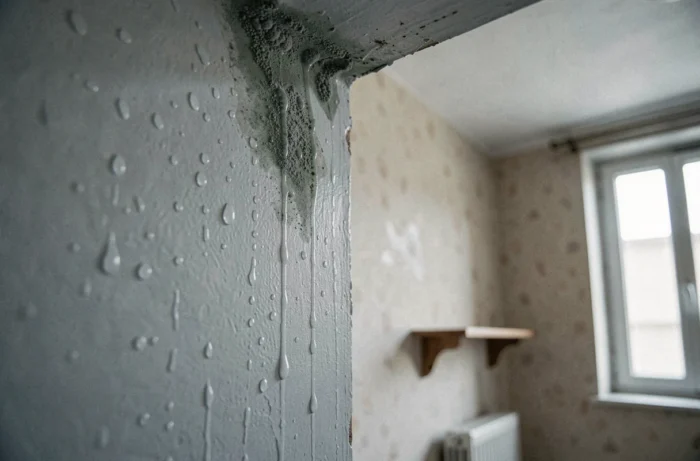
Mold in a corner of a wall, a cold wall sensation to the touch, heating bills that remain stagnant despite recent work: the thermal bridge is often singled out as the sole culprit. The reality is more nuanced. Condensation, water infiltration, and ventilation defects produce visually similar symptoms but require very different responses. Before undertaking any insulation work, accurately diagnosing the source of humidity changes everything, from budget to work efficiency.
Condensation, Infiltration, or Thermal Bridge: Distinction Table
A dark stain on an interior wall can have three distinct origins. Confusing them leads to unnecessary work or, worse, exacerbates the problem. The table below summarizes the clues that allow for differentiation during a visual inspection.
| Criterion | Thermal Bridge | Infiltration | Ventilation Defect |
|---|---|---|---|
| Typical Location | Wall/floor corners, slab/facade junctions, around windows | Ceilings under the roof, bottom of walls exposed to rain | Humid rooms (bathroom, kitchen), poorly ventilated areas |
| Stain Appearance | Diffuse mold, often in line along a construction joint | Irregular halo, sometimes with streaks of runoff | Mold spread across the entire surface, including tile joints |
| Time of Appearance | Winter, when the indoor/outdoor temperature difference is greatest | After episodes of rain or freeze/thaw | Year-round if the mechanical ventilation system (VMC) is off or clogged |
| Wall Touch | Localized cold area over a few centimeters | Wet area, sometimes oozing | Overall warm wall but covered with micro-droplets |
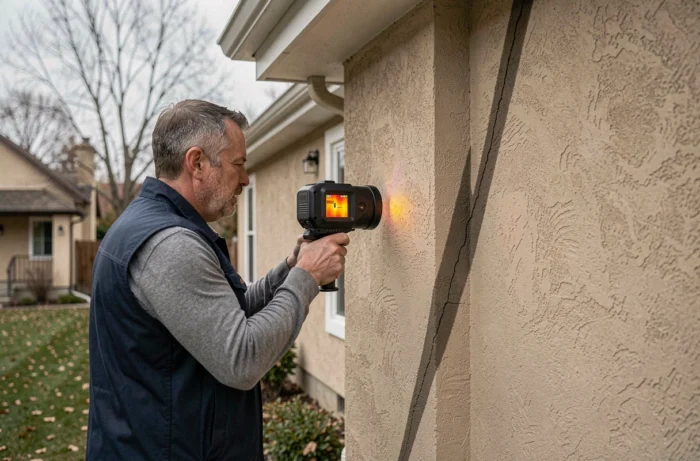
| Confirmation Tool | Infrared thermography | Leak test, roof inspection | VMC flow check, humidity measurement |
This preliminary sorting is the foundation of any reliable diagnosis. A professional equipped with a thermal camera can visualize temperature differences on the facade and precisely locate areas of heat loss, where a simple visual check remains ambiguous.
To delve deeper into the relationship between thermal bridges and condensation on Pôle Conseil Habitat, the physical mechanism is detailed along with critical thresholds of relative humidity.
Ventilation and Wall Insulation: The Order of Work Matters
Insulating a home without checking the state of ventilation is one of the most common mistakes in energy renovation. Enhanced insulation without appropriate ventilation worsens condensation. By making the envelope more airtight, it eliminates the unwanted air leaks that, by default, ensured minimal air renewal.
The decree of March 24, 1982, mandates general and permanent ventilation of homes, with air intakes in main rooms and extraction in service rooms. A stopped VMC, clogged vents, or obstructed air intakes are enough to explain the persistence of mold, even in a recently insulated building.
Consistent Sequence Before Touching the Insulation
- Check the operation of the VMC: actual flow at the vents, condition of the filters, continuity of the duct. A hygrometric adjustable type B VMC automatically adjusts the flow based on indoor humidity, which limits condensation without excessive heating consumption.
- Measure the ambient humidity in the affected rooms. A relative humidity level above 65% in winter indicates insufficient air renewal, regardless of the level of insulation.
- Then address the envelope: wall insulation from the outside to eliminate linear thermal bridges at wall/floor junctions, or from the inside with insulation returns on construction joints.
- Check the heating: an underheated home mechanically promotes condensation because the surface temperature of the walls remains low.
This sequence (ventilation, then envelope, then heating) is what technical guides for energy-consuming homes recommend. Reversing it is akin to sealing a leak without turning off the water supply.
Thermal Bridges at Windows and Construction Joints: Priority Areas to Address
Not all thermal bridges weigh the same in the energy balance of a building. The wall/floor junctions and intermediate slab/wall junctions concentrate the majority of linear heat losses. In contrast, punctual thermal bridges (metal fixings passing through insulation, embedded electrical boxes) generate smaller losses individually, but their cumulative number can become significant in metal-framed constructions.
The perimeter of windows is another critical point, especially when the frame is installed flush without a thermal bridge break. Replacing single glazing with high-performance double glazing only provides a partial gain if the window frame remains a direct thermal conductor between the inside and outside.
External or Internal Insulation: Impact on Thermal Bridges
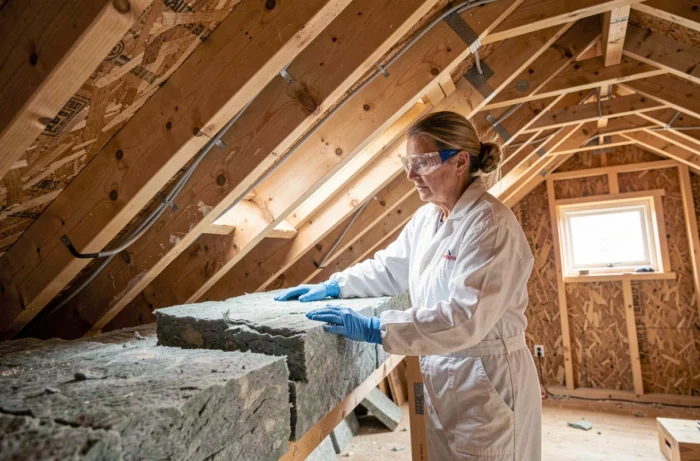
External thermal insulation eliminates almost all connection thermal bridges because it wraps the building continuously, without interruption at slab levels. It is the most thermally effective solution, but it alters the building’s exterior appearance and sometimes requires planning permission.
Conversely, internal insulation leaves thermal bridges at wall/floor junctions unless insulation returns are planned at slab ends. This precaution, often overlooked for simplicity, makes the difference between a renovation that resolves the condensation issue and one that merely shifts it.
Tenant or Owner Responsibility: Who Must Act on Mold
The legal question arises systematically when mold appears in a rented property. The owner is required to provide a decent home, free from health risks. A structural thermal bridge falls under their responsibility because it stems from the design or condition of the building.
The tenant, for their part, must ensure proper ventilation of the home: not obstructing air intakes, not turning off the VMC, and regularly airing out. If the mold results from improper use (drying laundry indoors without ventilation, willfully blocking vents), responsibility may shift.
In practice, a thermography report or humidity diagnosis conducted by an expert can clarify the distinction between structural defect and usage defect. This document becomes a crucial piece in case of dispute, whether to obtain work from the landlord or to defend against a deduction from the security deposit.
The distinction between thermal bridge, infiltration, and defective ventilation remains the starting point for any effective action. A precise diagnosis before work avoids treating a symptom without resolving the cause. Thermography, humidity measurement, VMC verification: these three checks, achievable in a single technical visit, guide towards the right solution and the right contact person.