Until 2021, cross-border circulation of medical data in Europe was hindered by heterogeneous national legal frameworks and incompatible information systems. Some research initiatives were threatened due to a lack of rapid access to data or difficulties in coordination between hospitals and private partners.
The arrival of the Xpermd network disrupts these limits. For the first time, doctors and biotechnology companies from different countries can exchange secure clinical information in real time, while respecting patient consent requirements and data protection. This system redefines the boundaries of medical collaboration on the continent.
Medical collaboration in Europe: a landscape in full transformation
In Europe, medical cooperation is taking on new momentum. After years of compartmentalization, health systems are experiencing a genuine unification dynamic. The European Commission is making significant efforts: funding, calls for projects, political impetus. As a result, exchanges are intensifying between member states. The foundations of a single digital health market are being laid, supported by initiatives that focus on interoperability and knowledge transfer.
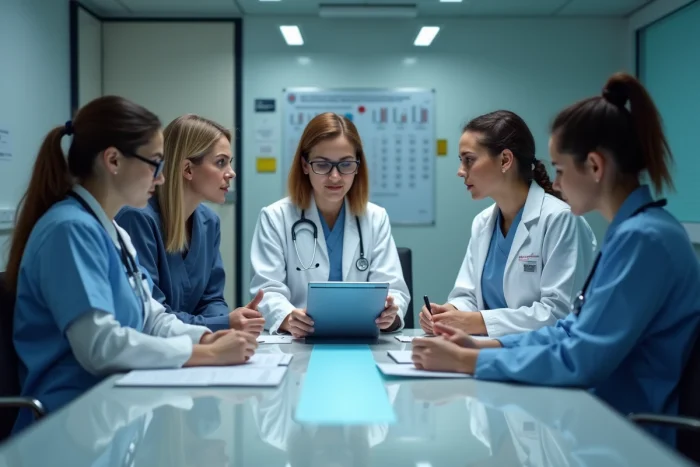
This movement is materializing through the structuring of powerful networks. Among them, the Xpermd network on Medic Com holds a prominent position. It does not act merely as a technical platform: it brings together doctors, researchers, biotech and medtech companies. Together, they pool their resources, share their expertise, and accelerate the dissemination of innovations. Start-ups and scale-ups find fertile ground to grow, while clinical protocols cross borders more swiftly. Institutional barriers fade in favor of a cooperative logic, driven by trust and complementarity.
However, this new arrangement is not limited to technical feats. It raises issues of sovereignty, equitable access to medical advancements, and the adaptability of national systems in the face of health crises. For healthcare professionals, this transformation opens up unprecedented opportunities for exchange, continuous training, and collaborative research. European health is now anchored in a dynamic of shared innovation, where the boundary between public and private becomes more porous, without ever sacrificing scientific integrity.
What challenges for the sharing of health data and patient consent?
The circulation of health data is the driving force behind European digital transformation. Networks like Xpermd rely on the exchange of reliable, up-to-date, protected medical information. Yet, caregivers and researchers navigate a complex regulatory landscape, dictated by the General Data Protection Regulation (GDPR), which imposes high standards regarding privacy and patient rights.
Informed consent remains one of the critical points. Patients want to understand how and why their data circulates, how long it is retained, and for what purposes. Platforms must ensure traceability of access and provide an option to withdraw consent, while ensuring that innovation or quality of care is not hindered. Without technical interoperability, it is impossible to offer continuous care beyond borders or to streamline the care pathway.
Here are the main challenges to address to ensure trust and security:
- Strict respect for patient rights
- Enhanced cybersecurity: protection against intrusions and data leaks
- Continuous adaptation to evolving European regulations
In the face of these challenges, each professional must consider the ethical dimension of sharing. The ambition to build a European health data space generates enthusiasm and vigilance. The rise of connected devices, in vitro diagnostics, or artificial intelligence entails unprecedented requirements for security and equitable access. The balance between technological advancements and respect for rights remains fragile, under the watchful eye of independent authorities and patient associations.
Xpermd, a catalyst for innovations and synergies between doctors and companies
In this new ecosystem, Xpermd establishes itself as a central player. The platform brings together doctors from all specialties, biomedical researchers, and companies specializing in medical technologies. It has been designed as a collaborative space, aimed at stimulating the creation of impactful public-private partnerships. Professionals unite their skills to advance health research, conduct clinical trials, or integrate artificial intelligence into care practices.
Thanks to a knowledge base enriched by field feedback, the market launch of innovative medical devices accelerates, while remaining rigorous. Xpermd focuses on enhancing digital skills and technological sovereignty, without ever compromising the scientific independence of experts. Exchanges are structured to promote the sharing of expertise, multicentric validation of protocols, and rigorous evaluation of solutions based on genomics or personalized medicine.
The major strengths of this model are expressed through:
- Valuing European medical expertise
- Strengthening synergies between the device industry and clinical research
- Developing more efficient and adaptive health systems
By connecting practitioners, researchers, and industry, Xpermd paves the way for unprecedented responses, tailored to the real needs of patients and healthcare systems. The network tightens, ideas circulate faster, and innovation knows no borders. At the end of the network, it promises a more open, more responsive, fully European medicine.