A farmer who wants to set up hives, a neighborhood association looking for space for a community garden, a craftsman in need of a temporary workshop: all may face the same question. Obtaining a municipal plot does not work like a traditional purchase on the real estate market. The municipality remains the owner, the rules vary from one town hall to another, and the procedure involves public law, urban planning, and local politics.
Public domain or municipal private domain: a distinction that changes everything
Before submitting any request, one must first identify the legal status of the targeted plot. A municipality has two types of land assets: its public domain (roads, squares, buildings designated for public service) and its private domain (brownfields, former rural paths, unallocated land).
The difference is crucial. A property in the public domain is in principle unalienable: the municipality cannot sell it or grant a traditional lease as long as it remains designated for collective use. For an individual to use it, a decommissioning followed by a reclassification is required, two distinct administrative acts voted by the municipal council.
The private domain, on the other hand, follows more flexible rules. The municipality can transfer, lease, or authorize occupation by agreement. Most individual projects succeed on this type of plot. You can benefit from a municipal plot with Flash Immobilier by understanding this mechanism even before contacting the town hall.
Municipal project calls: the new allocation filter
Since 2023-2024, more and more municipalities are no longer content to review spontaneous requests as they come. They publish formal project calls with selection criteria. Local anchoring, job creation, environmental dimension, social vocation: each criterion weighs in the decision.
This shift changes how one positions themselves. One no longer writes a simple cover letter addressed to the mayor. Instead, a structured file is created that demonstrates the project’s impact on the territory.
What the selection criteria concretely evaluate
- The consistency between the project and the Local Urban Plan (PLU) or the current municipal map, which sets the rules for land development and use
- The ability of the project leader to finance the servicing and development works without burdening the municipal budget
- The alignment with local priorities: energy transition, local facilities, participatory housing, or agricultural activity depending on the territories
- The measurable benefits for the municipality (jobs, services, community engagement)
Participatory housing projects and agricultural installations particularly excel in this format. A project leader who aligns their file with the priorities set by the municipality significantly improves their chances of allocation.
Departmental co-financing: an underutilized lever
One element that most candidates are unaware of: several departments have established, for the period 2026-2028, support funds for municipalities intended to co-finance their land projects. Grant rates can reach up to 40% of eligible expenses for servicing, equipment, or development.
Specifically, if your project aligns with a departmental priority (energy transition, local facilities), the municipality has every interest in supporting you. It recoups part of the investment through these funds. Mentioning this possibility in your file is speaking the budgetary language of the elected official.
How to integrate this argument into the process
Start by consulting the website of the relevant department to check if a land support mechanism exists. The department of Somme, for example, offers a specific fund during this period. If such a mechanism is active, it should be directly integrated into the application file by showing that the project allows the municipality to mobilize co-financing.
Responses vary on this point depending on the territories, but the logic remains the same: a project that facilitates access to grants for the municipality takes precedence over an equivalent project that does not offer this advantage.

Preparing the file at the town hall: documents and realistic timeline
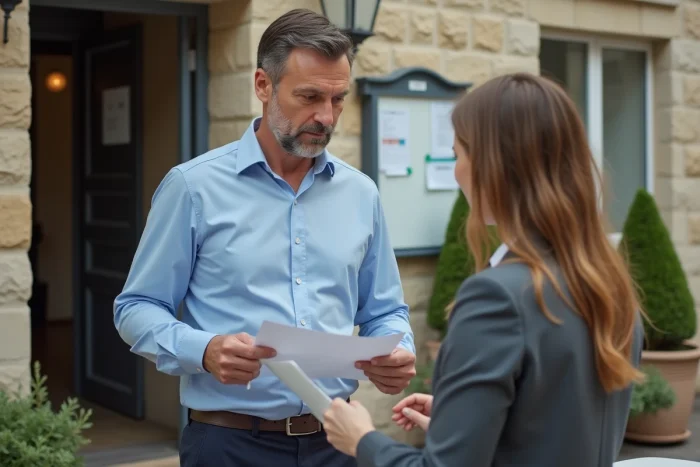
Once the plot is identified and the budgetary context established, the administrative phase begins. The application file is addressed to the urban planning department or the town hall’s secretariat, depending on the size of the municipality.
- A request letter addressed to the mayor specifying the cadastral plot, the desired area, and the intended use
- A project description with a location plan, estimated budget for works, and provisional development timeline
- The urban planning certificate for the plot, confirming the applicable rules (buildability, easements, possible connections)
- Any document proving financial viability: bank simulation, letter of intent for financing, or personal guarantee
The municipal council must then deliberate. For a sale, a valuation by the Departmental Services is mandatory to set a price in line with the market. For a lease or provision, the terms are defined by agreement.
Anticipated timelines
Between the submission of the file and the deliberation of the municipal council, several months should be expected. Municipal councils generally meet once a month in small municipalities, sometimes less during the summer period. The property evaluation adds an additional delay. A well-prepared project from the start avoids back-and-forths that extend the procedure by several weeks.
The increasing pressure on municipal land pushes some local authorities to prioritize their plots for companies creating local jobs, to the detriment of more individual uses such as second homes or leisure. Adapting your project to the needs of the territory remains the best accelerator for securing an allocation, whether through sale, lease, or occupation agreement.