
A KO (knock-out) corresponds to a loss of consciousness caused by a violent impact to the head. From a neurological perspective, the brain undergoes a rapid acceleration followed by a sudden deceleration within the skull, temporarily disrupting the functioning of the brainstem, the structure that regulates alertness and autonomic functions.
Brain Mechanism of the KO: What Happens Inside the Skull
When a blow is delivered to the head, the skull changes direction faster than the brain it contains. This displacement creates shear forces that stretch the axons, the nerve fibers connecting neurons to each other. The resulting concussion disrupts the transmission of electrical and chemical signals in the brain.
The brainstem, located at the base of the brain, is particularly vulnerable. It controls consciousness, breathing, and heart rate. A sufficiently violent impact causes a sort of short circuit in this area, leading to the characteristic loss of consciousness associated with the KO.
Intracranial pressure can also increase sharply after the impact. In the most severe cases, bleeding (subdural or epidural hematoma) compresses brain tissue. This situation constitutes a neurosurgical emergency that far exceeds the scope of a simple sports KO.
Understanding the potential dangers of a KO requires distinguishing the isolated event from the accumulation of trauma, as the long-term consequences depend heavily on this difference.
Accumulation of Head Blows and Chronic Traumatic Encephalopathy
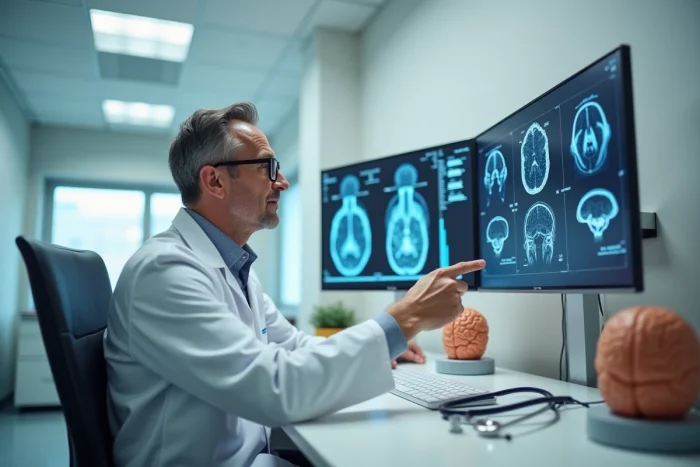
The main long-term health risk does not solely lie in a spectacular KO. The accumulation of head blows, including those without visible loss of consciousness, progressively damages brain tissue. Doctors are now more interested in the overall history of exposure to impacts than in just the “big shock.”
This repeated exposure can lead to a condition called chronic traumatic encephalopathy (CTE). The early warning signs include:
- Memory problems and cognitive slowing that gradually develop, sometimes years after stopping sports practice
- Mood disorders (irritability, depression, anxiety) and sleep disturbances that impair daily quality of life
- In advanced stages, dementia that clinically resembles Alzheimer’s disease, with loss of autonomy
CTE is recognized as a distinct neurodegenerative disease. It primarily affects professional boxers, MMA practitioners, and American football players, but it potentially concerns any sport where head impacts are common.
Warning Signs After a KO and Medical Action
A loss of consciousness after a head impact always warrants urgent medical evaluation. The KO increases the likelihood of a more serious brain injury than a simple concussion without prolonged symptoms.
Several signs should trigger immediate management: repeated vomiting, headaches that intensify instead of diminishing, persistent confusion, unusual drowsiness, or difficulty recognizing loved ones. Each of these symptoms may indicate intracranial bleeding requiring emergency brain imaging.
Even in the absence of these severe signs, monitoring for several hours is still recommended. The “second impact syndrome,” where a second trauma occurs before complete recovery from the first, can cause massive brain swelling with potentially fatal consequences.
Return-to-Sport Protocols After a KO
Current sports protocols require a much more conservative return to play than before. Immediate cessation of activity is mandatory as soon as a KO or suspected concussion is identified. This tightening of rules has intensified in recent years across most sports federations.
The resumption follows a progressive pattern: relative rest, then light physical activity, non-contact training, contact training, and return to competition. Each step can only be taken after complete resolution of symptoms and validation by a physician. A single persistent symptom (headache, concentration issue) is enough to extend the rest period.

Repeated KOs and Life Expectancy: What Current Data Shows
The question of the impact of KOs on life expectancy remains complex to definitively resolve. Available data shows that athletes exposed to repeated head trauma have an increased risk of neurodegenerative diseases, which can affect both the duration and quality of life.
The determining factor is the total number of head traumas sustained, not just the KOs counted in competition. The blows taken during training, often underestimated, contribute to the same process of neuronal degradation.
Some factors worsen the prognosis: too rapid a return after a KO, the length of career in a contact sport, genetic predisposition, and the age at which the traumas occur. A developing brain (before the age of twenty) is more vulnerable to lasting consequences than an adult brain.
Prevention remains the most effective lever. Limiting intensive sparring, strictly adhering to rest periods after each concussion, and consulting a neurologist at the first signs of unusual cognitive changes are concrete measures that can alter the long-term prognosis. An isolated KO that is well managed does not condemn, but the neglected accumulation leaves traces that current medicine cannot yet erase.