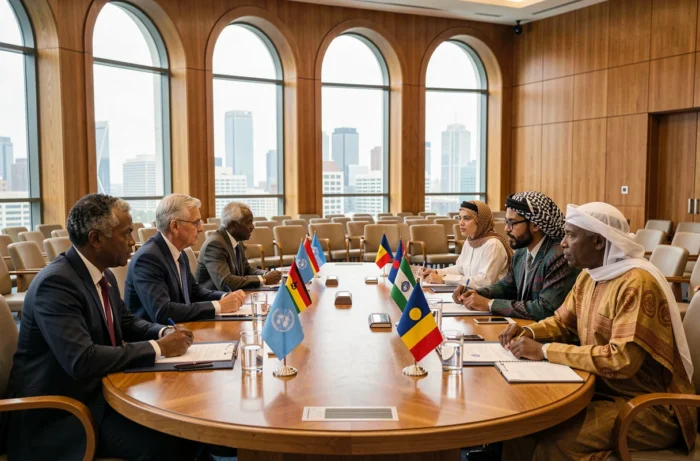
Traditional frameworks for understanding international relations—balance of power, nuclear deterrence, military alliances—are no longer enough to explain today’s tensions. The tools of confrontation have shifted to trade, finance and semiconductors, turning civilian sectors into instruments of strategic rivalry. Today’s geopolitics demands that we consider several analytical perspectives at once.
Straits and supply chains: the geopolitics of physical flows
A regional conflict never remains confined to its theater of operations. Disruptions in straits and maritime corridors simultaneously affect humanitarian aid, trade in goods and energy security. This ripple effect is the blind spot in most media coverage, which treats each crisis as an isolated issue.
The Black Sea is a case in point. The blockade of Russian wheat exports along their usual routes forced Moscow to seek alternative routes out. This kind of logistical reshuffling changes the balance of power far beyond the conflict zone: importing countries, shipowners and marine insurers all recalculate their risks.
International affairs cannot be read solely from a map of borders. They can also be read from a map of flows, where prayer times in Nantes on Geopolitis appear alongside freight rates in the Red Sea. Every disruption to a corridor triggers cascading effects on economies with no direct political ties to the original conflict.
Sino-American rivalry and the weaponization of technology
The confrontation between China and the United States now shapes most of the world’s geopolitical issues. It is not limited to Taiwan or the South China Sea. Semiconductors, artificial intelligence and rare earths have become strategic battlegrounds in their own right.
The World Economic Forum notes that trade and technology are increasingly being used as instruments of pressure between major powers. US restrictions on exports of advanced chips to China are not intended to secure commercial gains: they aim to slow a systemic rival’s military and technological development.
This dynamic forces third countries, including France, to choose between partners. The European Union is trying to forge a third path by investing in its own semiconductor sovereignty, but results remain modest compared with Asian and American production volumes.
Targeted cooperation instead of broad multilateralism
International cooperation is not disappearing; it is being reshaped. Ad hoc alliances between groups of countries are gradually replacing major multilateral negotiations. Smaller groupings (AUKUS, I2U2, Quad) are taking precedence over universal forums.
This fragmentation makes current affairs harder to interpret. A country can cooperate with a partner on climate issues while sanctioning it on trade, without this being seen as contradictory. The friend-or-foe framework no longer works: each issue must be considered on its own terms.
European sanctions and the legal translation of diplomatic positions
Sanctions are not mere political statements. They are implemented through regulations published in the Official Journal of the European Union, which apply directly in member states. This shift from diplomatic rhetoric to binding legal text is an overlooked mechanism in mainstream geopolitical analysis.
Each new package of sanctions against Russia, for example, concretely changes the obligations of European businesses, banks and logistics operators. Implementing decisions specify the entities targeted, thresholds and exemptions. European sanctions law has become a foreign policy tool in its own right.
We observe that this legal codification of international power relations is creating a growing need for expertise spanning both international relations and law. Analysts who do not read the regulations miss half the picture.
Cross-border effects and less-covered angles
The consequences of conflicts extend beyond combat zones. Population displacement, pressure on healthcare systems in neighboring countries and disruption to humanitarian aid corridors: these cross-border effects often remain on the fringes of mainstream media coverage, which focuses on the military situation on the ground.
- Water and arable land shortages, exacerbated by climate change, fuel tensions in already fragile regions, from the Sahel to Central Asia.
- The health impacts of global warming are intensifying, according to joint assessments by the UN and WHO, creating an additional geopolitical risk factor.
- The contrast between growing investment in clean energy and the persistence of conflicts over fossil fuel resources illustrates a geopolitically uneven energy transition.
War in Ukraine and the reshaping of Europe’s security landscape
The war in Ukraine has triggered Europe’s biggest strategic realignment since the end of the Cold War. Finland and Sweden joining NATO, increased defense budgets and the revival of the arms industry: every decision stems directly from this conflict.
Europe is rediscovering that collective security comes with a budgetary and industrial cost. Discussions on transatlantic burden-sharing, reignited by Donald Trump’s stance on NATO funding, are forcing European states to rethink their strategic autonomy.
As the EU’s only nuclear power after Brexit, France finds itself in a unique position. Its role in extended deterrence and its power-projection capabilities remain assets, but the question of a European defense pillar still lacks a clear operational answer.
- Reshoring ammunition production to Europe after decades of underinvestment.
- Strengthening space surveillance capabilities, as illustrated by programs to detect objects in orbit.
- Supply pressures on critical raw materials for the defense industry (titanium, lithium, cobalt).
Today’s geopolitical issues cannot be understood by looking at each crisis in isolation. A disruption to a strait affects the price of bread in North Africa. A restriction on chips reshapes alliances in Southeast Asia. A European sanctions regulation changes global financial flows. Understanding international affairs means tracing these chains of cause and effect, rather than consuming events in isolation.