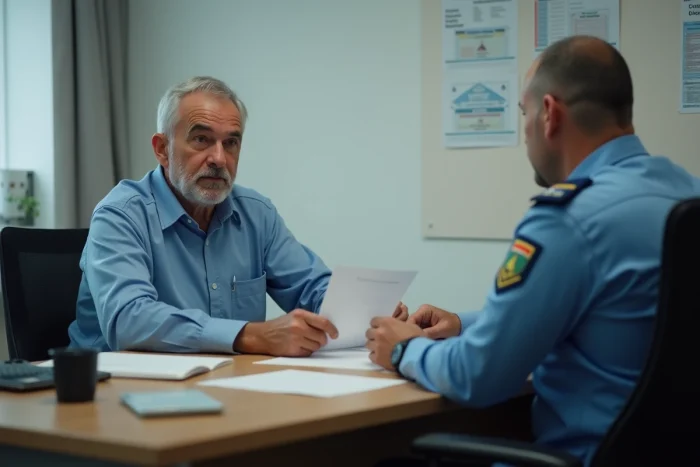
An official notice in the mailbox, and suddenly the routine shifts: everyone is summoned to take a position, sometimes with no other explanation than a date, a time, and a place. In France, the obligation to respond to a summons from the gendarmerie is debated; unless there is a clear mention of a judicial requisition, it is not formally required to attend. However, the absence of a reason or the vague wording of the letter does not eliminate the potential risk in case of non-presentation.
Summons to the gendarmerie: what might you be facing?
The arrival of an official letter creates immediate agitation: the gendarmerie is summoning you. Why? The reason is not always revealed as clearly as the date and time mentioned on the paper. Being called as a witness, victim, or potentially implicated makes all the difference. If you are simply invited to clarify certain facts, the context generally remains neutral. But the wording of the summons, often terse, can create confusion about your true status.
This type of letter rarely includes more details than the strict minimum. Yet, uncertainty remains, along with all possible interpretations. Pressure, doubt, questions: stress arises precisely from this lack of clarity. Before taking any steps, understanding what this summons entails becomes a healthy reflex.
Here are the typical cases that lead to a summons to the gendarmerie:
- Clarifications requested on elements of an ongoing investigation
- Your name mentioned in a case, requiring a response from you
- Continuation or modification of a previously filed complaint
- Participation in a confrontation aimed at putting different versions into perspective
Before making a choice, reading carefully your rights during a summons to the gendarmerie helps avoid misunderstandings and move forward with an informed perspective.
On site: fundamental rights and vigilance required
Once at the gendarmerie, the procedure becomes tangible. You are never compelled to tell everything: the right to remain silent is enshrined in law, and exercising it is not an admission but a possible, sometimes wise choice. For many, the presence of a lawyer provides support and assurance from the start of the hearing. Minors automatically benefit from this protection through their legal representative. If the language barrier is felt, requesting an interpreter helps restore balance.
Each exchange is recorded in writing in a report. Taking the time to reread, discuss, or refuse certain points is not a whim but a guarantee for the future: the slightest annotation, addition, or reservation is noted, sometimes changing the course of a case. It is common for a hearing to then be entered into the TAJ, the infamous criminal record database, with consequences that can extend over several years.
The interview can evolve. From a superficial dialogue, the situation may tighten and take on the appearance of a more restrictive hearing, or even police custody. Keeping a cool head throughout this exchange informs your decisions and avoids traps that sometimes close without warning.

Absence of reason: how to react well and surround yourself
When the summons remains silent on your real implications, doing nothing would be the worst option. Seeking advice from a lawyer is not an excess of caution, but often the most pragmatic attitude. This support allows you to demand clarifications: what is your exact status? Free hearing, victim, or possible implicated party? Sometimes, lawyers obtain additional details or assert a legitimate impediment, allowing for adjustments.
The intervention of a professional experienced in these matters prevents blind commitments. A well-targeted piece of advice can provide a head start, defuse a situation that is escalating, or assert certain rights. Conversely, letting deadlines slip or accepting the gray area of the case is akin to moving forward with a blindfold on. Demanding clarifications, checking every detail, activating every legally provided resource: these are all levers to maintain control and not suffer the consequences.
Facing a summons means accepting to take back control of your story in front of the uniform and the administration. Anticipating today often limits the vicissitudes of tomorrow, where chance certainly has no place.